Thursday, April 19, 2018

Grand Canyon Attractions


   Arizona is home to one of the Seven Wonders of the Natural World - the Grand Canyon National Park. The Grand Canyon is essentially a river valley in the Colorado Plateau. It was formed from the erosion of the Plateau due to its arid climate and was carved out from the cutting action of ice formations in the Colorado River. 

   The Grand Canyon also proves to be a significant geological site. The Vishnu Schist, a basement rock found in the bottom of the Grand Canyon, is believed to be almost 2 billion years old. 
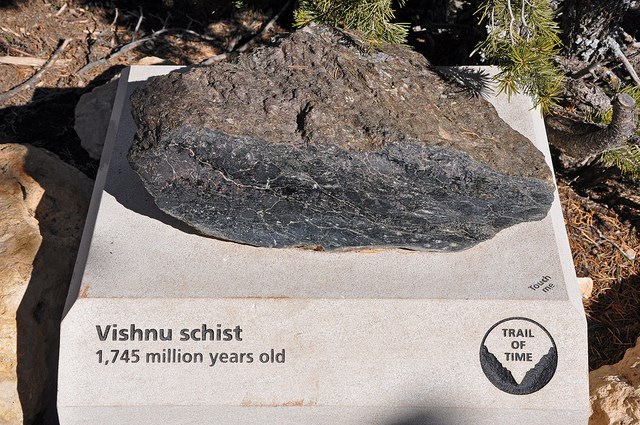
  
(Image source: National Park Service)

 Fast Facts:
  • It is 446km long
  • Its maximum depth is 1.8km
  • It is 29km at its widest point
  • It was declared as a National Park in 1919
      
   The Grand Canyon National Park has two known regions. They are called the South Rim and the North Rim.

The South Rim
 

    The most visited region of the Grand Canyon is the South Rim because of its accessibility. It is also more developed than the North Rim and has more amenities. For first-timers and visitors with children, it is best to visit the South Rim. An average of five million people visits the South Rim during summer, but the region is open throughout the whole year. 

   There is already a good number of lodging in the South Rim. There are also camping grounds located inside the park that offers camping opportunities for guests all year round but an overnight camping requires authorization from the Backcountry Office.  

   There are free shuttles you can take that offer the sightseeing in the South Rim. When you get to the Canyon View Information Plaza, choose among the free shuttles going to the following routes:

1. The Village Route explores the areas that are already well-developed. This includes the Grand Canyon Village, the Visitor Center, various viewing points, and hotels and restaurants.
2. The Hermit Rest Route gives you about 8 miles of the scenic route of the South Rim. It has nine stops for canyon overlooks. It is also a good trail for walking and cycling. It is currently closed to private vehicles until November 30, 2018, due to road constructions.
3. The Kalibab Trail Route drives to Yaki Point and to the South Kaibab Trail, a dangerous, descending trail that is advised for fit and experienced hikers only.  

The North Rim 


   This region of the canyon is near the border of Utah. It is more challenging to reach the North Rim than the South Rim that is why it gets fewer visitors. It is far from freeways and there are no airports nearby. It requires a four-hour drive from the South Rim. It only opens to visitors from mid-May to mid-October every year because of heavy snowfall in winter. 
  
  The North Rim only has three major viewpoints: the Cape Royal, Point Imperial and the Bright Angel Point. 
   
   The Cape Royal offers the widest view of the Grand Canyon. It is located at 8,000 feet and in the southernmost of the North Rim. 
  
   Port Imperial is the highest viewpoint in the park. It is situated at 8,803 feet. It is eleven miles away from the Visitor Center. 
    
   Bright Angel Point or Angels Window gives you a glimpse of the Colorado River. From the visitor area, Angels Window can be easily reached through a paved walkway. 
   
   The North Rim only has one campground but there are other campgrounds located outside the park.  

  
   Mule rides are also offered in the North Rim. Mules carry visitors down canyon trails. Experienced wranglers guide the mules throughout the one to three hours ride. 

PLANT AND WILDLIFE


The Pondesora Pine. Image Source: Grand Canyon Natural History
      
     Plant life is abundant in the Grand Canyon, especially near the Colorado River.

    The South Rim is the lushest region of the Canyon. A forest of Pondesora Pine, long-needled pines that grow up to 160 feet in moist mountains, stretches across the Rim. 

   The North Rim which is in higher altitude support other species of plants and animals that need cooler climate. Oak trees, aspen, maple, and birch are among the trees that can be seen on the North Rim.
   
   Some of the plants and wildflowers you can see in the Grand Canyon are the following:
  • Coyote Willow
  • Catclaw Acacia
  • Sagebrush
  • Ocotillo
  • Arrowweed
  • Western Honey Mesquite
  • Seep Willow
  • Yarrow
  • Evening Primrose
  • White Violet
  • Globe Mallow
  • Red Columbine
  • Palmer Lupine
  • Watercress
  • Rocky Mountain Iris

Birds 

     The Grand Canyon  is home to a more than a hundred species of birds. In fact, it was dedicated as a Global Bird Area in 2014 because of its role in protecting hundreds of bird species. 


The California Condor is the largest land bird in North America.

  • The Bald Eagles
  • Golden Eagles
  • Red-Tailed Hawks
  • Blue Jays, Ravens
  • Wild Turkeys
  • Turkey Vultures
  • California Condors
  • Peregrine Falcon
  • Riparian Birds
  • American Dipper
  • Southwestern Willow Flycatcher

Mammals 
  
   About 90 species of Mammals dwell in the Grand Canyon.

The Kaibab Squirrel inhabits the North Rim of the Grand Canyon

  • Bats
  • Squirrels
  • Raccoon
  • Bobcat
  • Gray Fox
  • Mountain Lion
  • Beavers
  • Mice
  • Mule Deer
  • Bighorn Sheep
  • Cotton Tail Rabbits
  • Ringtail Cats
  • Bison
  • Hog-nosed Skunk

Reptiles 

   More than 40 species of reptiles can be found in the park. 
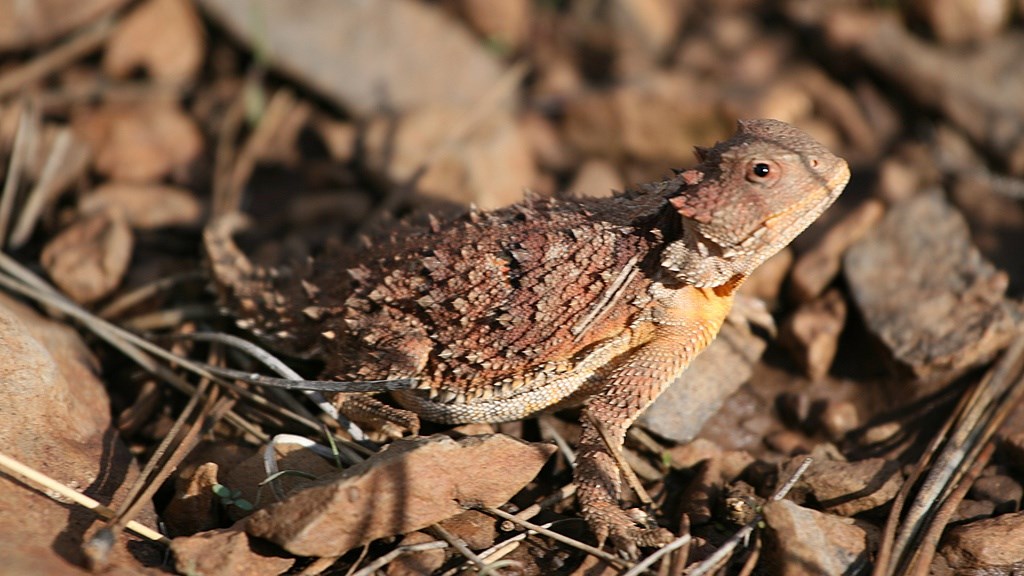


The short horned lizard. Image Source : National Park Service 

  •  Chuckwalla Lizard
  • Short-Horned Lizard
  • Salamanders
  • Toads
  • Grand Canyon Rattler
  • Diamond Back Rattler

   You can take guided tours from well-versed tour guides if you want to learn more about the plant and animal life in the Grand Canyon.

   There are two other Rims to visit in the Canyon where popular spots can be seen. They are called the Grand Canyon East and the Grand Canyon West. However, they are not part of the Grand Canyon National Park.

Monday, April 16, 2018

A Traveler from One Place to Another Through Time!

Something is really strange about who we are?....why? and how?
No one can for sure explain why humans living on the same planet as other animals are a lot more intelligent and no one can explain why there are unique human beings a lot more intelligent than others either!

It's very strange and there has to be something happening that can't be explained....do you believe in aliens,...I never did but now I do as a matter of fact I do believe they probably introduced intelligence to humanity!

It just does not make sense that people whether through evolution somehow became so intelligent that even their distant ape cousins are still that far off!... It's either alien did something to people or people traveled through time by wherever means and somehow their distant ape cousins are probably living in thousands of years behind!
Am a simple traveler that likes to get out and about from place to place,..but have you ever thought that as much as we think of cars or other physical means that we are also traveling through time!


Sunday, April 23, 2017

Did You Watch Nat Geo's Years of Living Dangerously!


If you haven't watched this you probably should and my biggest question right now is how on earth do we have politicians today that think climate change is a hoax,I mean you're either crazy or a complete idiot and I wonder if any of them would like their kids taught at school that there is absolutely no climate change and planet earth is running smoothly as ever.
Even in general circumstance without reading or watching scientific facts and you've lived your life and remember things that happened when you were a child versus now, assuming most politicians today have had a considerable time it's obvious that droughts have gotten worse,beaches are slowly swallowed by high waters and so forth and if you haven't noticed any change for a considerable time I wanna know where you live sounds like a perfect place to live in.

I personally wish there is more being done now to help our planet and more could be done am sure,it probably doesn't cost that much to plant more trees and so forth but of course politicians are busy spending tonnes of money on wars around the world as if that's a bigger threat than climate change repercussions, help me understand this because I don't and maybe instead of building a wall across the border how about plant millions of trees in Texas, Arizona, Nevada and California will probably cost a smidget of what the wall would.

I don't know what the best answer is but assuming a wall was built just an example and 60 billion dollars spent and 50yrs down the road millions of people from California, Texas, Arizona move up North due to lack of water and extreme droughts, which would have been a better investment?

Is it me or is it incredibly frustrating to see people in power denying climate change I would like to believe they're getting paid by corporate interests to do so,at least that would explain in trying to make sense of the situation but sooner or later it will catch up as what science has been trying to prove is starting to happen.As usual though it's human nature if it's not happening to you personally then it probably isn't happening but eventually as it's starting to happen it will start happening to the majority and at that moment maybe people will realize that all threats politicians in power make us believe around the world were not merely urgent as it was to fighting climate change.
Think about it for a minute if 50%[3 trillion dollars] of the money that was spent fighting in the middle East was spent towards curbing climate change,would we and the future of our kids be in a better place?

Sunday, May 22, 2016

Battle for Survival.

buffalo attacked by lion

buffalo attacked by lion
The hundreds of years battle between buffalo and lion still goes on in the Maasai Mara.

Saturday, April 30, 2016

Kenya Sets Ablaze Over 105 Tonnes of Ivory and Rhino Horns!

Over $170 million dollars of illicit wildlife goods set ablaze by the Kenyan government in an effort to convey a strong message against poaching.

Most people get it, the astronomical number of elephants lost each year to poachers is insane, over 30,000 elephants lost each year to illegal trade and sadly it's gotten so big that it's run by sophisticated kingpins and each year seems to be getting worse!

South Africa is making an effort to legalize this trade and maybe the idea is sort of like marijuana in Colorado am not sure, I think it's more like if you legalize it then there would be less value for trading it illegally and might not be financially viable for illegal dealers to keep going.

I love animals and am open to ideas that would actually solve this crisis and maybe South Africa's idea would work and maybe not but anything at this point is worth trying because what's not declining is the number of elephants and rhinos lost each day and as a matter of fact it's increased substantially.

So what's the solution and it's not elephants or rhinos only but in case you didn't know the pangolin has a lot of demand in Asia as well and poachers aren't discriminating and probably many more wildlife are at risk of extinction!

Do I think it's a good idea to burn the largest stockpile of these illegal wildlife goods ever burnt in history, no I don't think so and I completely disagree that it would solve the core problem as far as poaching.

The demand for ivory is going up regardless and to burn it is just likely to increase the prices even more and just to give you an example, there was a time when we heard in the news when some oil production facilities burnt in the middle east and what happened after that, oil prices skyrocketed.
The same thing is likely to happen here and the publicity of it as well could go either way and probably benefit the illegal trade as well as they realize the scarcity of it, most likely boosting the prices.

Kenya has burnt an enormous amount of ivory and rhino horns over the years starting in 1989 and has it solved the problem, unfortunately not and repeat of the same thing to expect a different result doesn't work on this planet, maybe on a different planet.

Some people might argue sell it and use the money to protect what's left and that sounds like a good idea but it can't be done as most nations including Kenya have signed an agreement not to do so and not only that but also corruption might get in the way of making that a success.

So my personal opinion just keeps it in a public museum and have government and independent overseers that publicly keep track of the goods and update it and even put the records on government websites.

Why I think this is a better idea which isn't perfect but there will come a time when the wild has no more elephants and rhinos and unfortunately it's going to happen if this trend keeps up. It will be impossible to keep carcasses in a museum but of course much more sensible to keep the ivory and rhino horns as a constant reminder of the magnitude of wonderful wildlife lost and probably much more effective to future generations and burning them I think will be such a short-term memory that I doubt in two weeks anyone would remember this story, sadly!


http://www.cnn.com/2016/04/30/africa/kenya-ivory-burn/